Treatment Journeys
Amatoritsero Olumami-Oyibo ·
3 min read

PUBLISHED 15 JULY 2026 • PART 5 • OVULATION INDUCTION
Medical information, not personal medical advice Letrozole should only be used under the direction of a qualified fertility clinician. Your age, diagnosis, ovarian response, sperm results, tubal health and treatment setting all affect your individual chance of success. |
|---|
Why ovulation does not always lead to pregnancy
The other steps that shape a letrozole outcome
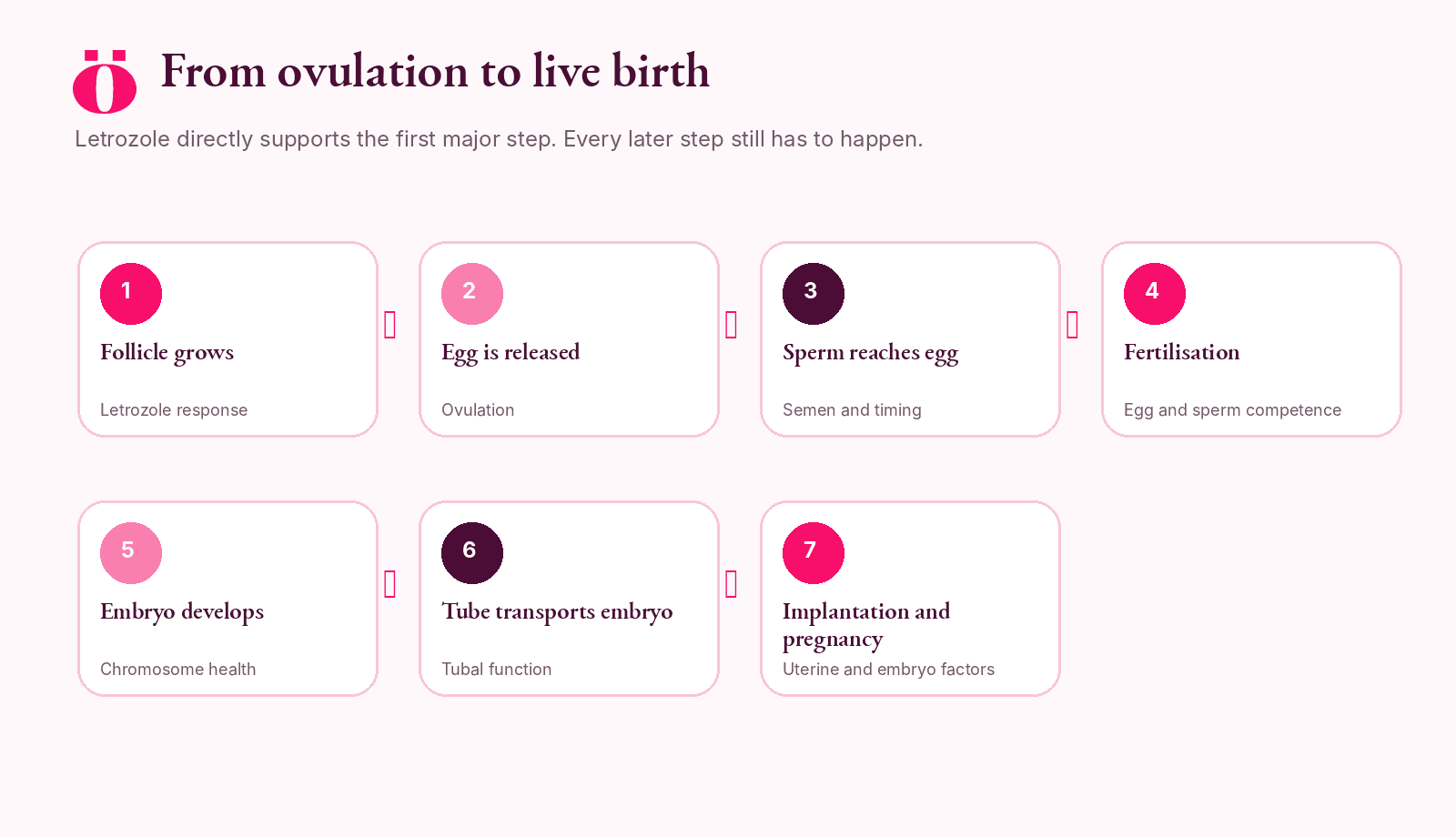
Seeing a dominant follicle or confirming ovulation can feel like the finish line. Clinically, it is an important milestone: the medicine has helped achieve the step it was prescribed to support. Pregnancy still requires a sequence of events that letrozole does not control directly.
Sperm health still matters
Successful ovulation cannot compensate for a significant sperm factor. Semen analysis typically considers concentration, movement and morphology. Results can vary, and an abnormal test may need confirmation or specialist assessment. Testing early prevents repeated cycles aimed at only one side of the fertility pathway.
At least one functioning tube is usually needed
With timed intercourse or IUI, sperm and egg normally meet in a fallopian tube. A tube may be blocked, damaged or function poorly after infection, endometriosis or surgery. Letrozole can release an egg but cannot create a route for fertilisation if both tubes are blocked.
Timing has to match the fertile window
The egg remains available for a limited period after ovulation, while sperm can survive for several days in favourable conditions. Clinics may use ultrasound, urinary ovulation tests, blood tests or an hCG trigger to coordinate intercourse or insemination. A good follicle response can still be missed when timing is uncertain.
A fertilised egg must become a viable embryo
Fertilisation is the beginning of another selection process. Some embryos stop developing before implantation, often because of chromosome errors. This is one reason ovulation and positive pregnancy rates are higher than live-birth rates, particularly as age increases.
The uterine environment may influence implantation
Fibroids that distort the uterine cavity, polyps, adhesions and some uterine abnormalities may affect implantation or pregnancy. Not every finding requires treatment, and management depends on size, location, symptoms and the wider clinical picture.
What does a dominant follicle tell you?
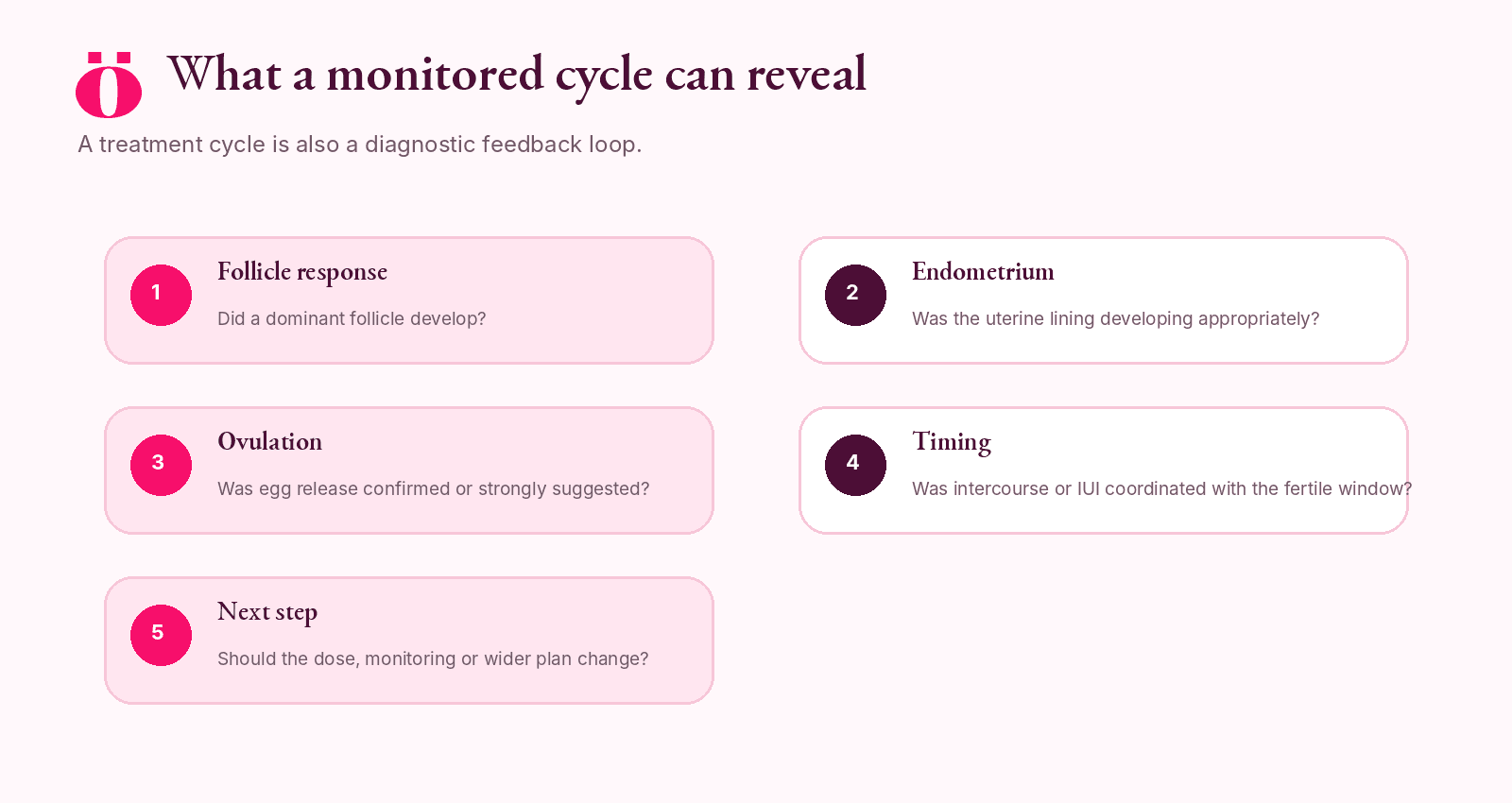
A dominant follicle means the ovary has recruited a follicle that appears capable of maturing. It does not prove that the follicle contains a healthy egg, that ovulation definitely occurred or that fertilisation followed. Follow-up progesterone testing or ultrasound may be used when confirmation is clinically useful.
When should the wider assessment be revisited?
No ovulation despite dose adjustment or several monitored cycles.
Regular ovulation but no pregnancy after the agreed number of well-timed cycles.
A semen analysis that has not been completed, repeated or acted upon.
No assessment of tubal patency where it is clinically indicated.
Pain, abnormal bleeding or history suggesting endometriosis or uterine pathology.
Increasing age or reduced ovarian reserve making delay more consequential.
Oocyt clinical insight A cycle that does not result in pregnancy can still provide useful evidence. The question is whether the next cycle will use that evidence to improve the plan, or simply repeat the same approach. |
|---|
The bottom line
Ovulation is necessary for conception through intercourse or IUI, but it is not sufficient. Letrozole works best when the diagnosis is clear and sperm, tubes, timing, uterine factors and treatment response are considered together.
References
1. NICE (2026) Fertility problems: assessment and treatment. NICE guideline NG257.
2. Teede, H.J. et al. (2023) International evidence-based guideline for the assessment and management of polycystic ovary syndrome.
3. Cambridge University Hospitals NHS Foundation Trust (accessed July 2026) Using letrozole tablet (Femara®) for ovulation induction.
4. American Society for Reproductive Medicine (2021) Fertility evaluation of infertile women: a committee opinion.
Editorial disclaimer Oocyt provides fertility education, guidance and support services only. We do not provide medical advice, diagnosis or treatment. Medical decisions should be made with licensed healthcare professionals and your treating clinic. |
|---|